
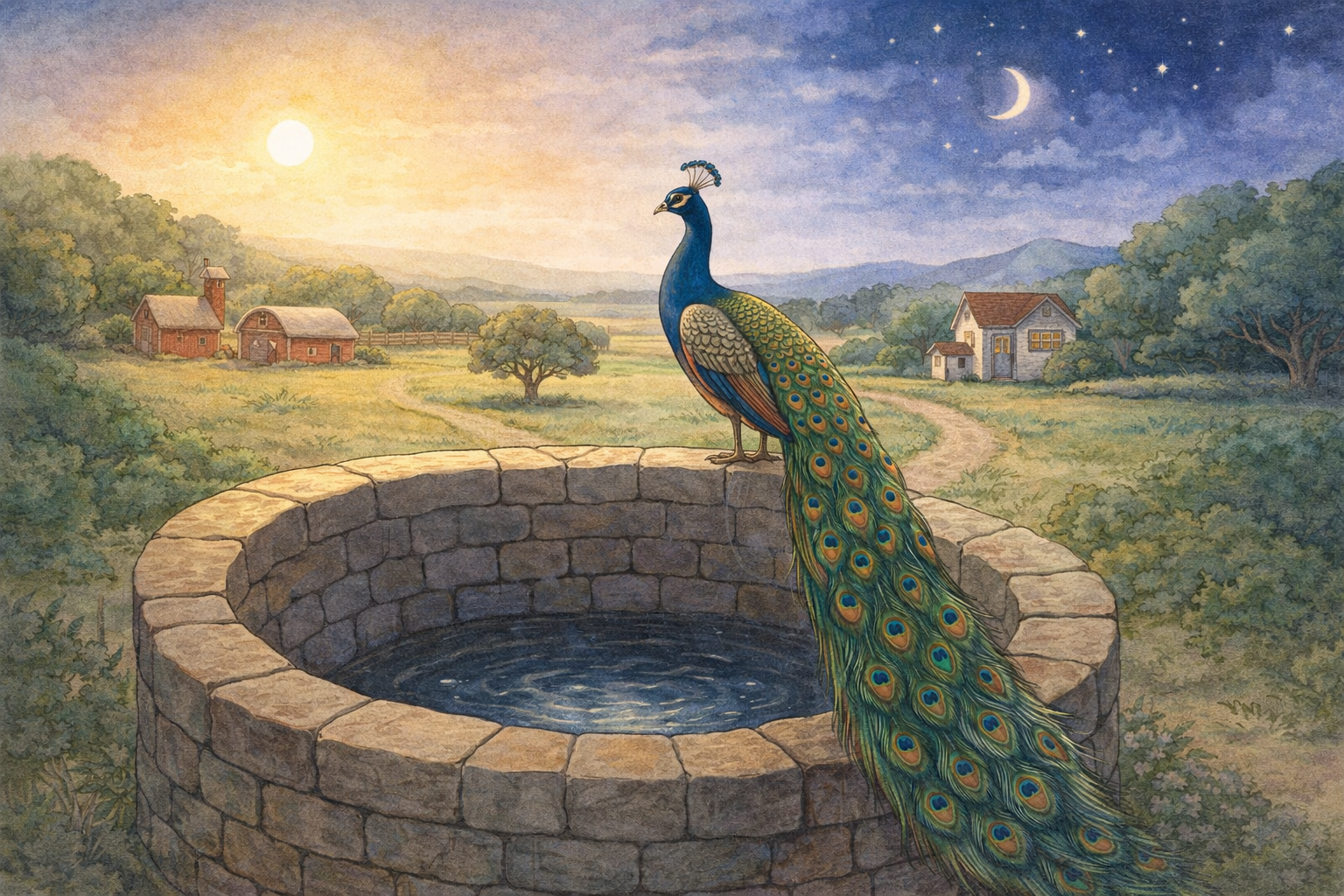
This post is symbolic representation of my inner journey of this year of 2025. I am trying to reflect in it a pictorial guide way which can be helpful to few of you. For more context go through background at end of the post.
Main Text: This blog describes a summary of short and concise but a very important book called “Simple Explanation of work ideas”. The work here means the journey to understand what is inside us and become more conscious of who we are.
Here each image represents the main idea of chapter. Given a brief summary of each image, it will help to understand original text better.
Chapter 1 and 2
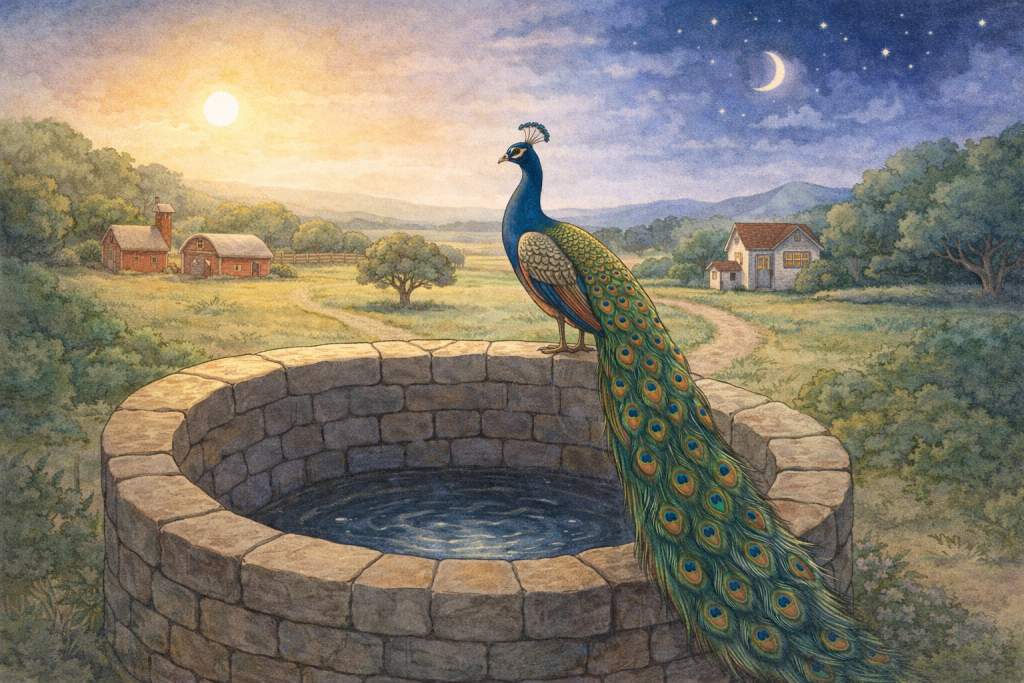
We think we are “one”, This one-ness is a myth, we are not one, we have many “I” within us. This peacock is our one of the “I”, for instance we think we have only this one “I”, but its not true. Deep well is our consciousness. The stone wall of deep well is edge of consciousness and rest is physical world outside as usual.
The peacock see outside and think that is enough, peacock just seats on the edge of consciousness and physical world! What this peacock sees is what we see from our eyes 👀
Chapter 3
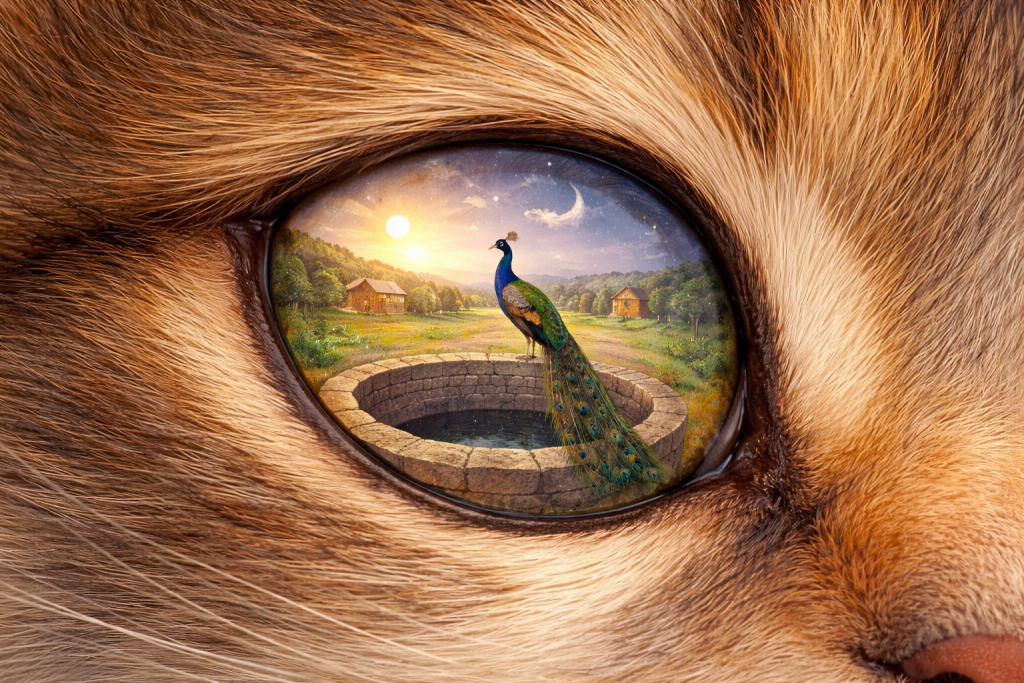
Now the progress in spiritual work starts when we understand that there is not only peacock in jungle of our mind. First step is we have to realise that there exists another “I”! And using that eye of another “I” we have to see the peacock (which we thought as our only one “I”).
Chapter 4
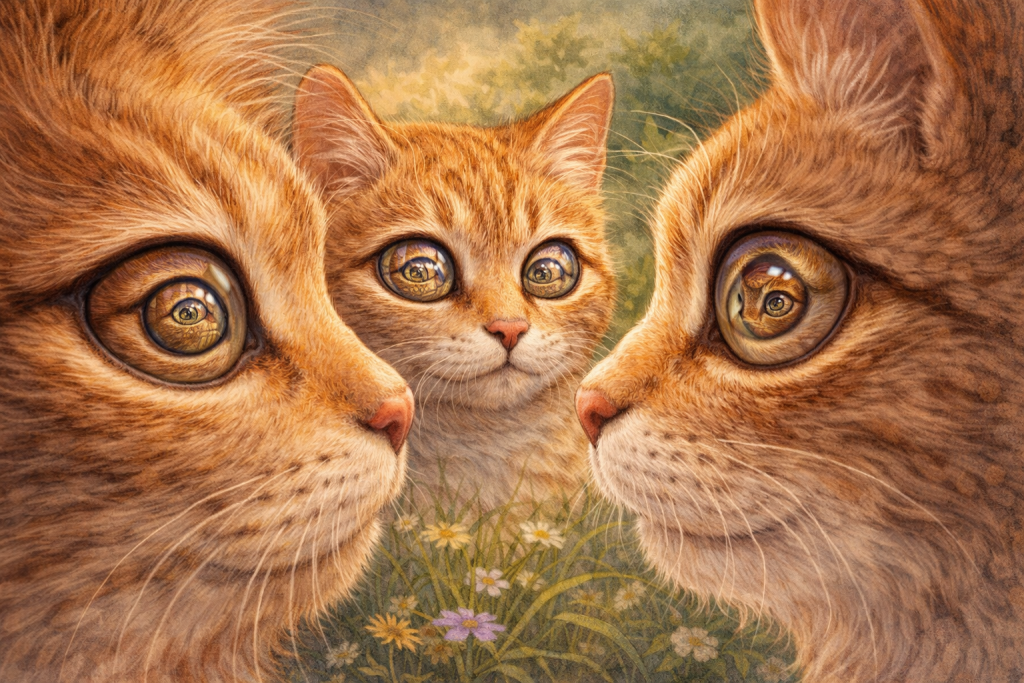
Now when we recognise the existence of second “I” we come to next step that there are multiple “I” and each of them operating in different ways. For example here three different natural “I” looking for each other’s actions and visions.
Chapter 5
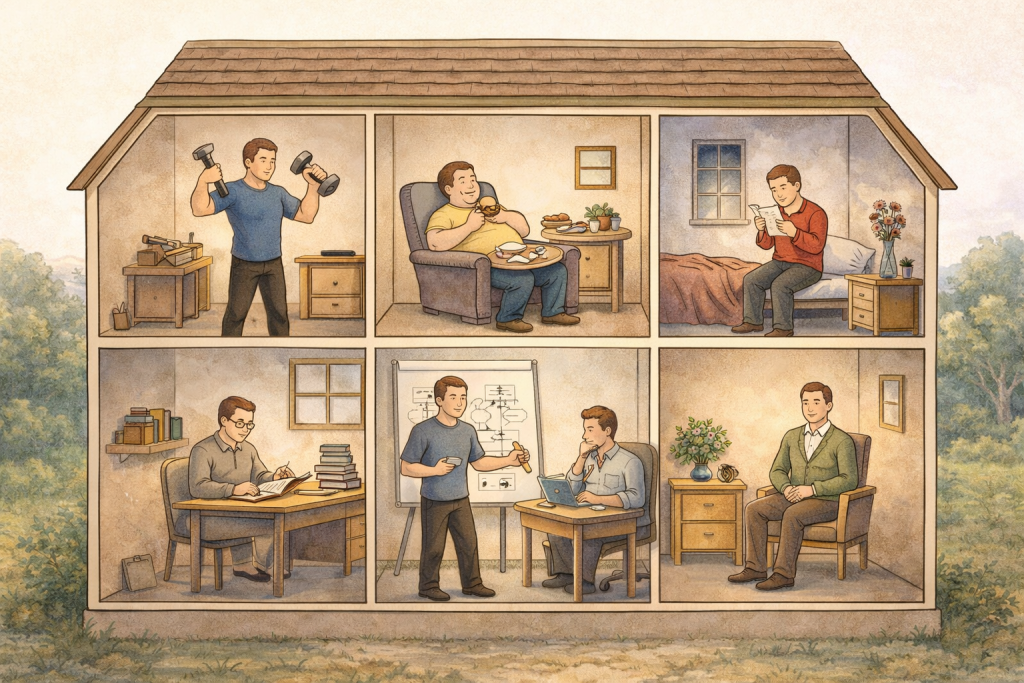
Now this chapter talks about 3 Centres of Man. These are 6 possible “I” combination of man using three different centres , emotional centre, instinctive centre and intellectual centre.
There are different levels of this centres merged with each other, for example last seating man has none of centres is heavy than other. A centred, composed man sitting or standing calmly, with no single activity dominating. All elements (body, heart, mind) present in harmony.
Chapter 6
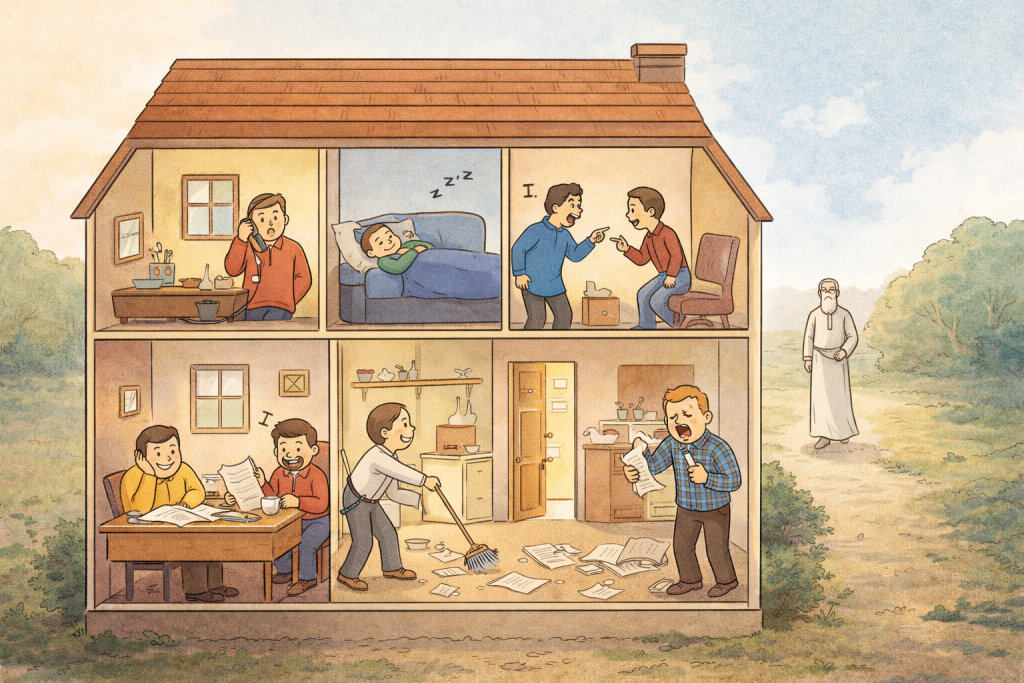
So using above all elements, we have many “I” pretending to be supreme eye , but none of them are master, all of them are just being controlled by combination of different centres.
For example in mind you can see two different “I” not in alignment of each other. One burns the paper and other still keep cleaning it. One “I” worry, other “I” make it peaceful. A symbolic, easy-to-understand illustration of a human mind as a house in disorder.
Some I busy in karma, some Is sleeping and some “I” just busy in pretending they are master.
But real master of mind is outside, all knowing, saint like, humble. Divine and powerful.
Chapter 7

Now this is created using my favourite painting Wanderer above the Sea of Fog, the same peacock or first “I” or what we call so called integrated “I” looks like this, both wings represents positive and negative aspects of each centre.
Fog represents uncertainty, lack of clear vision, heights, future, our another “I” from behind of this peacock (like first cat) is observing these all, this is Self Observation metaphor. Example of what self observation must include. (Self Observation and Self Remembrance are major are of the work)
Chapter 8

Now next part is observation of knowledge vs observation of essence of being. Being vs Knowing. First man knows a lot, has lots of money, he can be hero or a criminal, his knowledge level is higher but being level he is unaware.
Second man dont have much of knowledge of world outside (or may be inside), he is just being , His being level is higher than knowing level. He may be ignorant, he may know nothing but he is being him.
These two things coexist in us and we need to observe it.
Chapter 9

Now next is, how man shape himself among all these “I” , answer it he shape his essence and his real knowledge about himself through the his own personality.
The rocks are our Sanskaras or memory patterns, we shape ourselves by sculpting from it, by design ourselves from experience of oneself. One stroke at a time. (I have childhood memory of seeing this artefact “Sculpting The Self” in exhibition of Akshardham temple, Gandhinagar as a kid).
Chapter 10

We have to break our personality to become what we really are. Best example is How a seed become tree by breaking his own shell seed has created first. So which Personas to break first to answer this let’s revisit the house in disorder visual.
Chapter 11
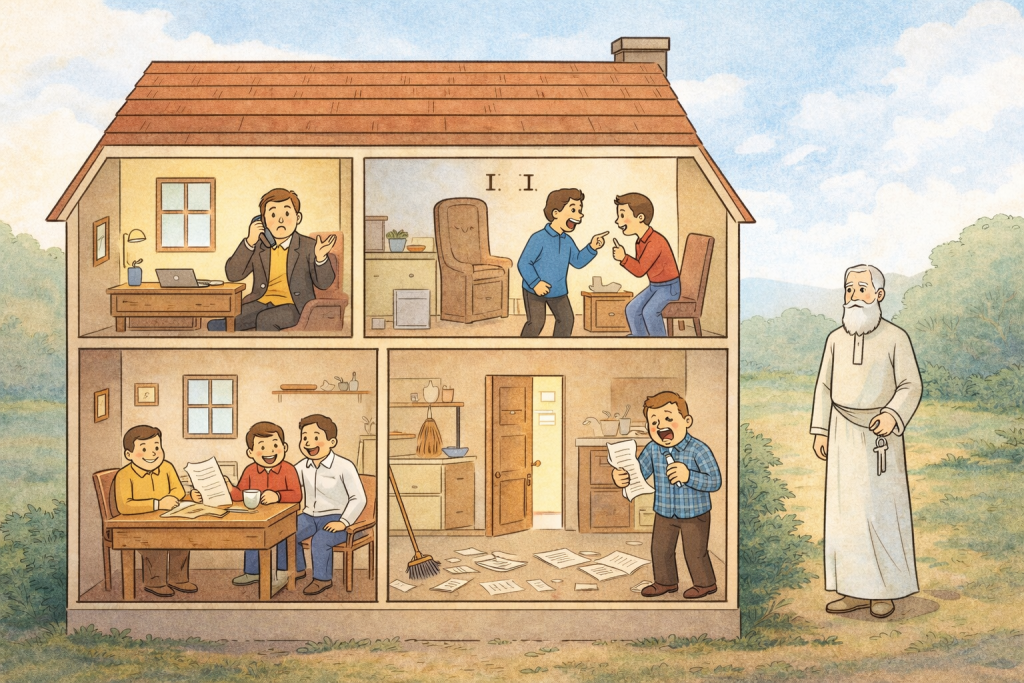
We have to break our false I first like all knowing “I”, arguing “I”, worrying “I”. The real master has to come to control of mind and acknowledge the existence of “I”s help the house of mind break free from it. Also it might be required to break the false “I”s. This chapter talks about the process of taking control of “I”s
Chapter 12
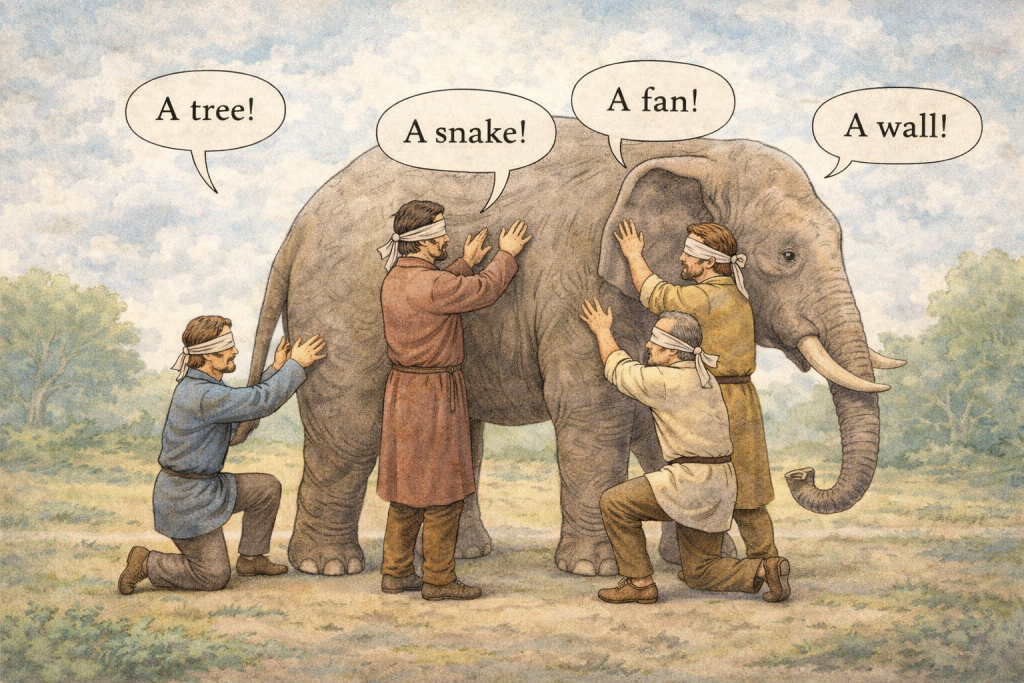
Finally chapter 12 talks about how to achieve this, how to give master the all control of right “I”s, all power to break false “I”s and design his essence from his own experience of life and memories pattern.
Answer to is by doing “True Self Observation”, not bounded one or blinded one but addressing an elephant as just an elephant!
Background: This year my friend introduced me Rajen Vakil, one of a very good speaker and practitioner of the different schools of meditation. This was really an interesting and path changing meetup.
Meeting him and going through his discourse, I happened to come across few important figures in literature both from eastern and western part of world. You can go through work of them whenever you are interested.
1. Swami Brahma Vedant Ji from Madhvpur
2. Shri Tavariaji – A spiritual scientist
3. George Gurdjieff – Philosopher and Mystic
4. Maurice Nicoll – Psychiatrist and writer
As a psychoanalyst, Being a life long reader and follower of Carl Jung, the work of Maurice Nicoll came most fluid to me. While going through his work I came across one book called “SIMPLE EXPLANATION OF WORK IDEAS” I imagined few figures and images which helped me understood the text.
In this blog post I am sharing the summary of chapter with image suitable for it. The original text itself is very concise and is just 17 pages long. It can be access here on this HMW link. Again, Thanks to my Dear friend for Helping me in my inner journey. To discuss this topic at depth you can write to me on Twitter at @go_movie_mango or @hindumediawiki. Happy 2026!